
Functional Endoscopic Sinus Surgery (FESS): Advanced Treatment for Chronic Sinus Problems
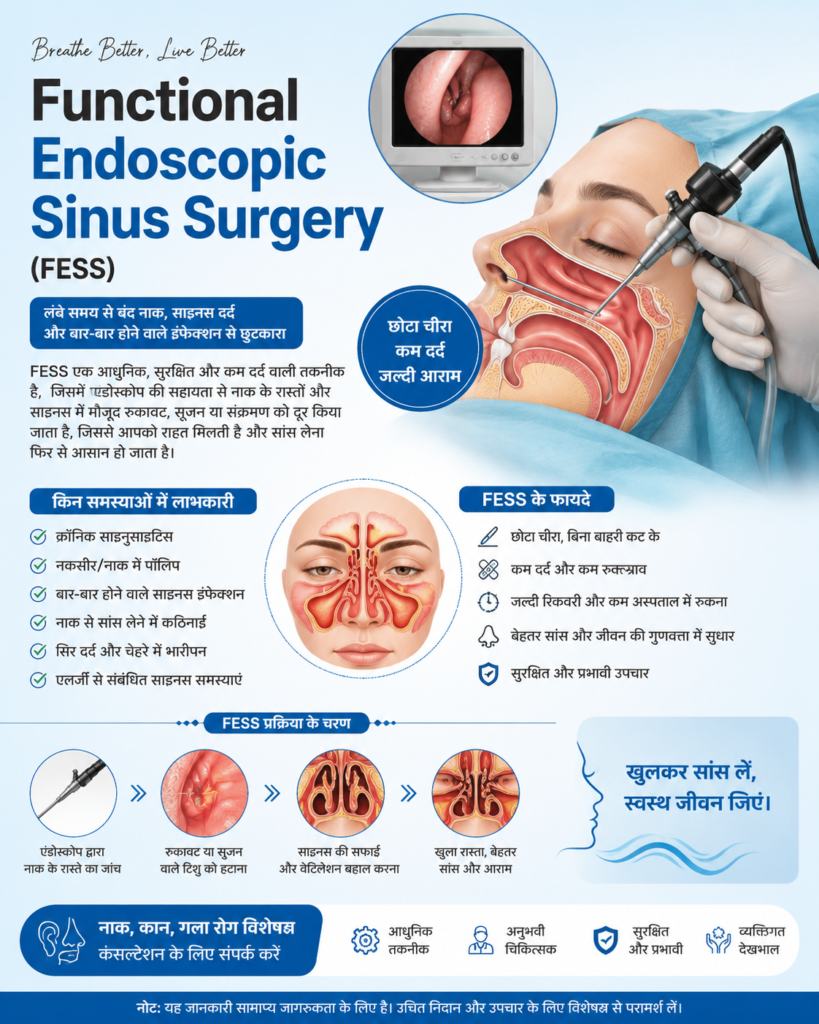
Functional Endoscopic Sinus Surgery (FESS) is a modern, minimally invasive procedure used to treat chronic sinus problems that do not improve adequately with medicines. The surgery uses a small endoscope to examine and treat the nasal passages and sinuses without making external facial incisions.
For patients suffering from chronic sinusitis, nasal blockage, recurrent sinus infections, nasal polyps, facial pressure, or difficulty breathing through the nose, FESS can help restore normal sinus drainage and improve nasal function.
What Is Functional Endoscopic Sinus Surgery?
Functional Endoscopic Sinus Surgery, commonly known as FESS, is an endoscopic ENT procedure designed to open blocked sinus drainage pathways and improve the natural functioning of the sinuses.
During the procedure, an ENT surgeon uses a thin camera called an endoscope to view the inside of the nose and sinuses. Specialized instruments may then be used to remove obstructive tissue, nasal polyps, or diseased tissue while preserving as much healthy tissue as possible.
When Is FESS Recommended?
FESS may be considered for patients with:
- Chronic sinusitis
- Recurrent sinus infections
- Persistent nasal blockage
- Nasal polyps
- Facial pain or pressure related to sinus disease
- Post-nasal drip
- Reduced or altered sense of smell
- Sinus problems that persist despite appropriate medical treatment
- Certain sinus-related complications
A detailed ENT examination and appropriate investigations, such as nasal endoscopy and CT imaging when indicated, help determine whether surgery is appropriate.
Benefits of Functional Endoscopic Sinus Surgery
FESS is performed through the natural nasal passages and generally does not require external cuts on the face. Potential benefits may include:
- Improved nasal breathing
- Better sinus drainage
- Reduction in recurrent sinus symptoms
- Relief from nasal blockage and pressure
- Improved access for managing certain sinus diseases
- No visible external surgical scar
The results can vary depending on the underlying sinus condition and the patient’s individual health.
How Is FESS Performed?
Before surgery, the ENT specialist evaluates the patient’s symptoms, nasal passages, medical history, and relevant imaging. During FESS, an endoscope is carefully introduced through the nostril.
The surgeon identifies the affected sinus pathways and treats the areas responsible for obstruction or disease. The goal is to restore normal ventilation and drainage while preserving healthy nasal and sinus structures.
The procedure is usually performed under anesthesia, with the exact surgical approach depending on the patient’s condition.
Recovery After FESS
Recovery varies from person to person. Some patients may experience temporary nasal congestion, mild discomfort, or a small amount of nasal discharge after surgery.
Your ENT specialist may recommend nasal saline irrigation, prescribed medicines, and follow-up examinations to support healing. Regular postoperative care is important for achieving the best possible outcome.
Why Choose an Experienced ENT Specialist?
Sinus surgery requires careful evaluation and precise treatment of the affected sinus pathways. An experienced ENT specialist can determine whether medical treatment, endoscopic treatment, or another approach is most appropriate.
Dr. Rajeev Singh, ENT specialist in Gorakhpur, provides evaluation and treatment for various ear, nose, and throat conditions, including chronic sinus and nasal problems.
Functional Endoscopic Sinus Surgery in Gorakhpur
If you are experiencing persistent nasal blockage, chronic sinusitis, recurrent sinus infections, facial pressure, nasal polyps, or difficulty breathing through your nose, an ENT consultation can help identify the underlying cause.
Consult Dr. Rajeev Singh, ENT Specialist in Gorakhpur, for professional evaluation and personalized treatment for sinus and nasal conditions.
Frequently Asked Questions About FESS
1. Is FESS a major surgery?
FESS is a minimally invasive endoscopic procedure, but the extent of surgery depends on the underlying sinus disease.
2. Does FESS leave a facial scar?
Because FESS is performed through the nasal passages, there is generally no external facial incision or visible facial scar.
3. Can sinusitis return after FESS?
FESS can improve sinus drainage and symptoms, but some chronic sinus conditions may require ongoing medical management and follow-up.
4. Is FESS suitable for everyone with sinusitis?
No. Surgery is generally considered after appropriate evaluation and when medical treatment has not provided sufficient improvement or when specific structural/disease-related indications are present.
Conclusion
Functional Endoscopic Sinus Surgery (FESS) is an advanced minimally invasive ENT procedure that can help selected patients with chronic sinus disease, nasal polyps, persistent nasal blockage, and recurrent sinus problems. Proper diagnosis, individualized surgical planning, and postoperative care are essential for successful treatment.