
Deglutition (Swallowing): Understanding the Process, Disorders & ENT Treatment
Deglutition, commonly known as swallowing, is the complex process through which food, liquids, and saliva move from the mouth to the stomach. Although swallowing appears simple, it involves coordinated actions of the tongue, throat, muscles, nerves, and esophagus.
For people experiencing difficulty or discomfort while swallowing, timely evaluation by an ENT specialist can help identify the underlying cause and guide appropriate treatment.
What is Deglutition?
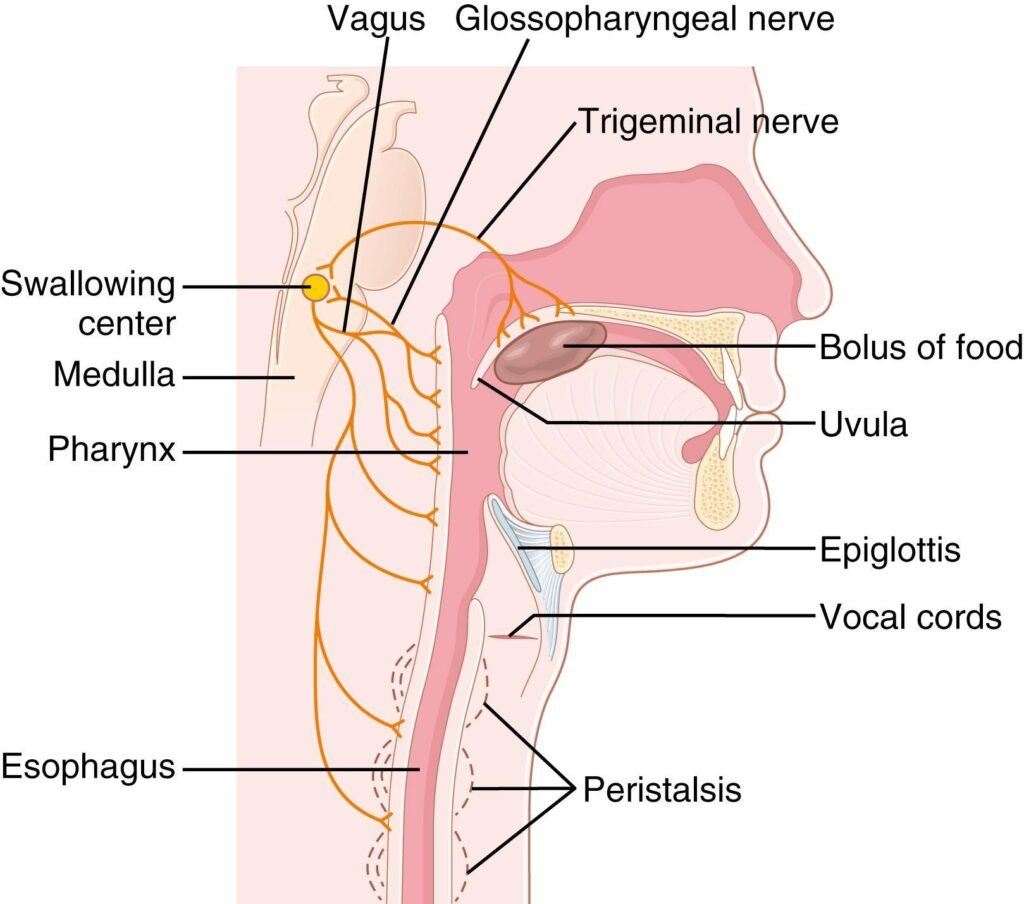
Deglutition is the medical term for swallowing. It is a coordinated process involving several muscles and nerves of the mouth and throat. Normal swallowing allows food and liquids to pass safely into the esophagus while preventing them from entering the airway.
The swallowing process is generally divided into three phases:
1. Oral Phase
During the oral phase, food is chewed and mixed with saliva. The tongue then moves the food toward the back of the mouth.
2. Pharyngeal Phase
The food passes through the throat. The airway is temporarily protected to prevent food or liquid from entering the lungs.
3. Esophageal Phase
The food enters the esophagus and moves toward the stomach through coordinated muscular contractions.
What is Dysphagia?
When a person has difficulty swallowing, the condition is called dysphagia. It may affect the mouth, throat, or esophagus.
Common symptoms of swallowing difficulty include:
- Difficulty swallowing food or liquids
- Feeling that food is stuck in the throat
- Pain while swallowing
- Frequent coughing or choking during meals
- Repeated throat clearing
- Change in voice after swallowing
- Regurgitation of food or liquids
- Unexplained weight loss
- Recurrent chest or respiratory infections
These symptoms should not be ignored, particularly when they persist or become progressively worse.
Causes of Swallowing Problems
Difficulty in deglutition may have several causes, including:
- Tonsil or throat infections
- Enlarged tonsils or adenoids
- Acid reflux and throat irritation
- Neurological disorders
- Muscle weakness affecting swallowing
- Esophageal disorders
- Head and neck conditions
- Tumors or other structural abnormalities
- Age-related changes in swallowing function
An ENT examination can help determine whether the problem originates in the mouth, throat, larynx, or surrounding structures.
Diagnosis of Deglutition Disorders
An ENT specialist may evaluate swallowing through a detailed medical history and clinical examination. Depending on the symptoms, investigations may include nasal endoscopy, laryngoscopy, swallowing assessment, imaging studies, or other specialized tests.
Early diagnosis is important because untreated swallowing disorders may sometimes lead to choking, aspiration, nutritional problems, or dehydration.
Treatment for Swallowing Difficulties
Treatment depends on the underlying cause. Depending on the diagnosis, management may include medicines, dietary modifications, swallowing exercises, voice and swallowing therapy, treatment of infections or reflux, or surgical intervention when a structural problem requires it.
When Should You Consult an ENT Specialist?
You should consider an ENT consultation if you experience persistent difficulty swallowing, repeated choking, painful swallowing, a sensation of food getting stuck, unexplained weight loss, or persistent throat or voice changes.
Expert ENT Care in Gorakhpur
Dr. Rajeev Singh, ENT Specialist in Gorakhpur, provides evaluation and treatment for various ear, nose, and throat conditions, including swallowing and throat-related problems. A proper examination can help identify the cause of swallowing difficulties and determine an appropriate treatment plan.
Conclusion
Deglutition is an essential function that requires precise coordination between the mouth, throat, nerves, muscles, and esophagus. Persistent swallowing difficulties should be medically evaluated rather than ignored. Early diagnosis and appropriate treatment can help improve swallowing function and overall quality of life.